
Archived News
 |
Jan 4, 2010
|
An invited session at the American Economic Association titled “New Directions in the Economic Analysis Human Capital”, (G1, I1, I2) was Co-Chaired by Isaac Ehrlich and (UB) Jim Heckman (U. of Chicago) at the Atlanta American Association meeting on Jan. 4, 10:15 am and held at the Atlanta Marriott Marquis. Click HERE for full program. |
 |
Nov. 19, 2009
|
New Directions in the Economic Analysis of Education Conference in ChicagoThe Center organized an International Conference in Chicago titled “New Directions in the Economic Analysis of Education” which was held at the University of Chicago on Friday, November 20, 2009, and Saturday, November 21, 2009. Dr. Ehrlich, in coordination with Noble Laureate Gary Becker, head of the Milton Friedman Institute for Research in Economics at the University of Chicago, organized and cosponsored the event. The conference featured 8 papers by teams from the US and Europe on cutting edge topics in the area of education. See the |
 |
Sept. 14, 2009
|
Ehrlich serves as Keynote Speaker at Rockefeller InstituteSustaining and advancing New York’s “human capital” is critical to the state’s efforts to recover from the current recession and compete in the global economy, according to experts at a New York State Network for Economic Research conference held at the Rockefeller Institute on September 14. Keynote speaker Isaac Ehrlich, chair of the Department of Economics at the University at Buffalo and editor of the University of Chicago Press’ Journal of Human Capital, said human innovation and ingenuity are responsible for the technological advances that have fueled the U.S. economy over the last century. He urged further investment in the state’s human capital not only to help speed economic recovery but also to help the nation maintain its position as an economic leader. Other speakers discussed such topics as education and employment trends, and their relationship to economic activity. |
 |
Nov 2008
|
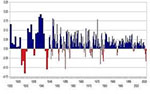
Start of Recession in New York State Signaled by UB ResearchersAlthough no official determination has been made about whether New York State or the U.S. is in the midst of a recession, researchers from the University at Buffalo’s Center of Human Capital believe New York entered a recession beginning in the second quarter (April-June) of 2008. Their conclusion results from an innovative recession-dating method they developed to forecast the start of recessions at the state level. The method uses an approach similar to the one used by the National Bureau of Economic Research (NBER) to date the start and end of business cycles at the national level, using national data. Click here for more information |
 |
Sept. 2008 |
Ehrlich Named to Governor’s Economic Advisory CouncilRenowned University at Buffalo economist Isaac Ehrlich has been named to Governor David A. Paterson’s newly convened Council of Economic Advisors. The 18-member council also includes Robert Rubin, former United States Secretary of the Treasury and current chairman of the Executive Committee of Citigroup, Roger Altman, former United States Deputy Treasury Secretary and current chairman and CEO of Evercore Partners, and Joseph Stiglitz, 2001 Nobel Prize winner. Click here for more information |
 |
April 2008 |
UB Economists Provide Revenue Forecasts to State ComptrollerTax revenue forecasts by University at Buffalo team including Isaac Ehrlich, Ph.D., Yong Yin, Ph.D., Alejandro Rodriguez, Ph.D., and Michael Xuezheng, Ph.D. candidate at UB’s Center of Excellence on Human Capital, Technology Transfer, and Economic Growth and Development are having a significant impact on budget negotiations in determining how much the state has to spend. Please see this web page for entire article: http://www.buffalo.edu/news/9317 |
 |
May 2007
|
Dr. Ehrlich quoted in the New York TimesA column in The New York Times by David Brooks on the need for Republicans to find a presidential candidate who can transcend current political categories and lay out a human-capital agenda cites research conducted by Isaac Ehrlich, SUNY and UB Distinguished Professor and chair of the Department of Economics, who showed that the United States became the richest country because in the 19th and 20th centuries it had the most schooling and the best circumstances to help people develop their own capacities. The article may be read online at http://www.buffalo.edu/news/pdf/May07/NYTimesEhrlichOpEd.pdf. Dr. Ehrlich’s mention in the NY Times is based on his recent NBER paper: Isaac Ehrlich, 2007. “The Mystery of Human Capital as Engine of Growth, or Why the US Became the Economic Superpower in the 20th Century,” NBER Working Papers 12868, National Bureau of Economic Research, Inc. Downloadable from: http://ideas.repec.org/e/peh1.html, or http://papers.nber.org/papers/w12868.pdf |
 |
March 2007
|
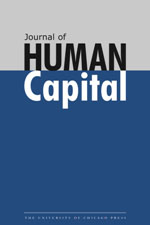
Journal of Human Capital ApprovedThe Journal of Human Capital is dedicated to human capital and its expanding economic and social role especially in today’s emerging “knowledge economy.” Developed in response to the growing recognition of the central role human capital plays in determining allocation, distribution, and long-term growth of economic resources, JHC is a forum for theoretical and empirical work in human capital and related public policy analysis. JHC is distinguished from other economics journals by bringing together many conventional areas of economic inquiry and offering a common platform for discussion in areas ranging from labor, health, and family economics to income and wealth distributions, social mobility, institutions and politics, crime and corruption, technological innovation and transfer, productivity and structural change, and economic growth and development. Read more at the Journal of Human Capital |
 |
Jan. 2007
|
Mystery of Human CapitalDr. Ehrlich’s new paper looks at why the US overtook the UK and other European countries in the 20th century in both aggregate and per-capita GDP, as a case study of recent models of endogenous growth where human capital is the “engine of growth”. Please see this webpage for more details. |
 |
Dec 2006
|
Kim wins Journal of Population Econ Kuznets Prize for Best Paper 04-06Jinyoung Kim won the Kuznets Prize for Best Paper 2004-2006 from the Journal of Population Economics for his paper “Sex selection and fertility in a dynamic model of conception and abortion”, (2005) 18: 041-067. He received it in a ceremony held in June 2007. |
 |
Oct 2006 |
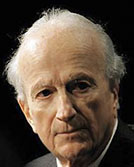
Becker to attend Human Capital ConferenceNobel laureate Gary Becker, along with other the notable economists, attended the inaugural conference of the Signature Center of Excellence on Human Capital, Technology Transfer and Economic Growth and Development, held this past weekend at the Buffalo Niagara Marriott. Read more at the UB Reporter |
 |
August 2006
|
Questions & Answers featuring Dr. Ehrlich from UB ReporterIsaac Ehrlich is SUNY Distinguished Professor and chair of the Department of Economics, College of Arts and Sciences. He also is Melvin H. Baker Professor of American Enterprise in the School of Management and serves as director of the Center of Excellence on Human Capital, Technology Transfer and Economic Growth and Development. Read more at the UB Reporter |
 |
Dec. 2005
|
Ehrlich received NYSTAR awardResearchers at UB involved in diverse fields in engineering and economics have been awarded a total of $1.5 million in faculty development grants from the New York State Office of Science, Technology and Academic Research. Read more at the UB Reporter |